Rare Cervical Cytology.
Dear Cytotechnologists and Cyto-Pathologists,
In the context of Cervical Cancer Screening, let’s talk about rare cervical cytology that includes diagnostic categories from Atypical Glandular Cells to Adenocarcinoma of the Endocervical cells.
Since the widespread introduction of organized Cervical Cancer Screening programs, there is no significant improvement in the detection of Glandular Abnormal Lesions, but in striking contrast there is an increase in the incidence and the rate of mortality caused by Endocervical Adenocarcinoma.
Note:
Endocervical Adenocarcinoma constitutes 10-20% of Cervical Cancer Cases ¹ ²
Higher mortality rates and poorer prognosis;
Predominantly affects women aged 30-50.
Why are cytological screening methods unable to reduce the incidence of endocervical adenocarcinomas?
Possible causes:
Limited familiarity with atypical glandular cells – a rare occurrence, leading to decreased alertness among screeners.
Appearance in less than 1% of Cervical Cytology Specimens – resulting in reduced focus on endocervical cells during screening.
Important:
Recognition and detection of Atypical Glandular Cells during screening is key as AGC detection is associated with a high and persistent risk of Endocervical Cancer.
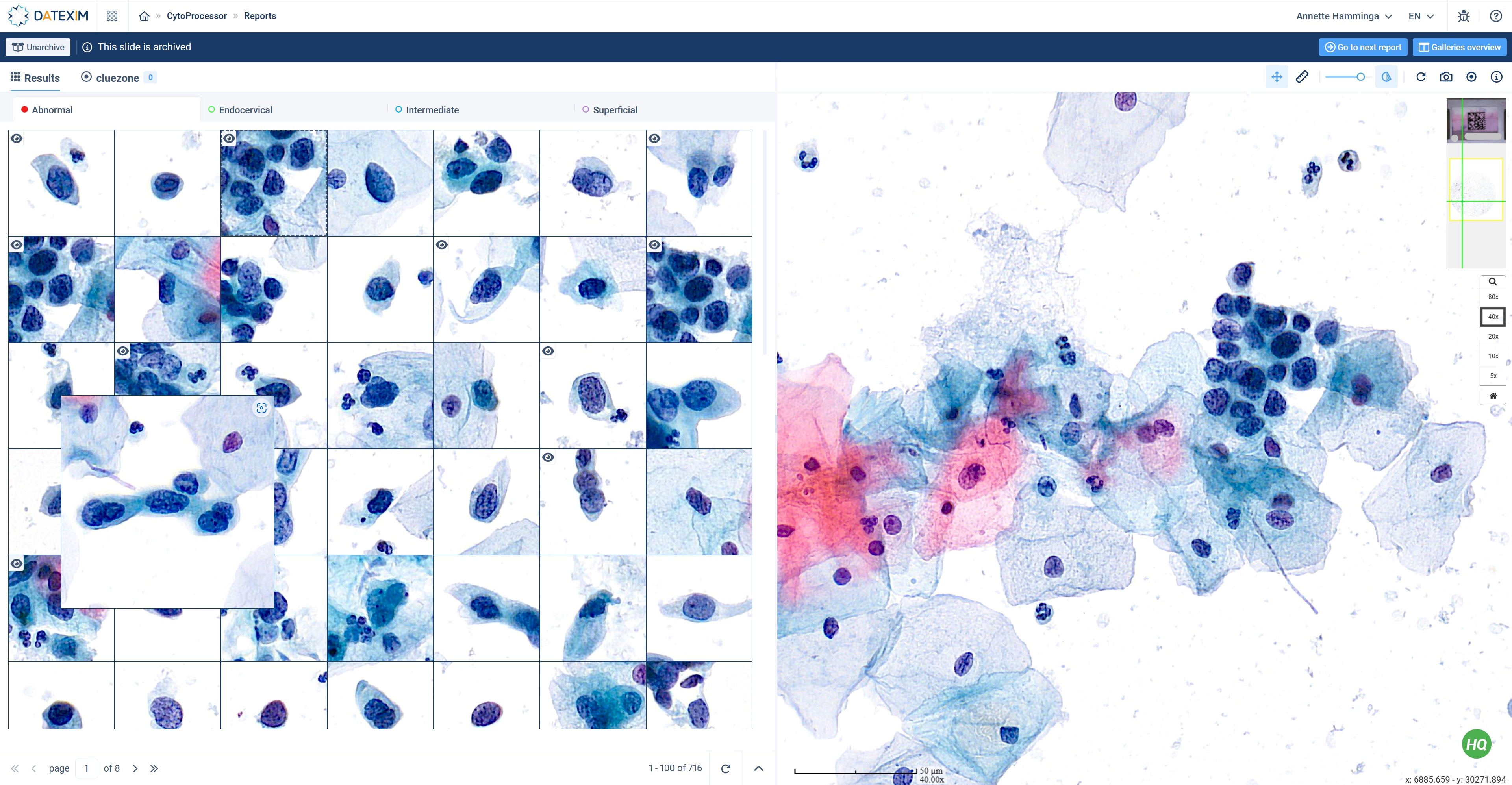
This is where CytoProcessor comes into play. It efficiently sorts the most diagnostically relevant cells, placing them at the forefront of the abnormal cell gallery. Atypical Endocervical Cells are prominently displayed, alerting viewers at first glance. Subsequently, screeners can examine these preselected AGC cells within their contextual Digital Microscopical Field.
Note:
The presence of Atypical Glandular Cells – AGC – is associated with a high chance of developing endocervical adenocarcinoma.
Early detection of AGC’s is thus of great importance for early treatment.
Richard Mac DeMay, in his book ‘The Art & Science of CytoPathology (part 1),’ outlines the cytological criteria for Endocervical Atypical Cells and Endocervical Adenocarcinoma. Key criteria for AGC, AIS and Endocervical Adenocarcinoma include:
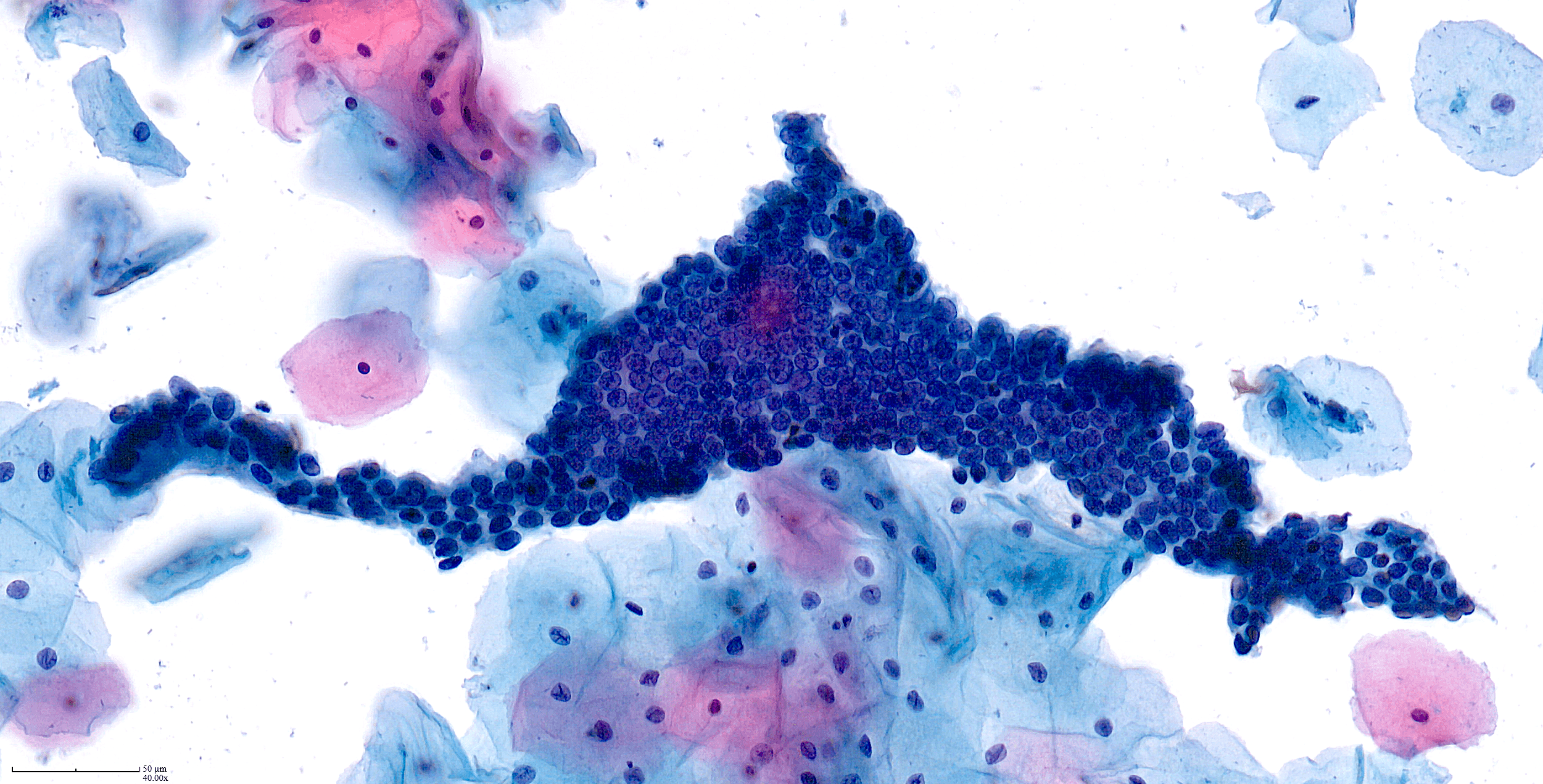
Changes in cell group architecture: : from lying flat (honeycomb / palisade) to hyperchromatic crowded groups, crowded rosettes, and feathery edges.
Distinctive nuclei characteristics: oval, elongated to irregular, prominent
A high N/C ratio
Often the presence of LSIL/HSIL cells
Abundance of endocervical cells.
Stay vigilant for potential pitfalls!
For more information, please ask Datexim for the instructions for use.
— Annette W. Hamminga (CTIAC), Digital Cytology Expert at Datexim
¹ Read the article: Incidence Trends of Adenocarcinoma of the Cervix in 13 European Countries
² Read the article: Increasing incidence of invasive and in situ cervical adenocarcinoma in the Netherlands during 2004–2013
CytoProcessor® is a CE marked IVD device, intended for use by healthcare professionals only. Please consult the user guide provided by the manufacturer, DATEXIM, for detailed conditions of use and recommendations for safe and effective operation.
PICTURE
Case of Adenocarcinoma in Situ (AIS)
Link to others articles :